


Social Phobia
Are you overwhelmingly afraid of public speaking or even getting in touch with others, portraying yourself as an 'introvert'? Be aware. It might be more serious than just that!
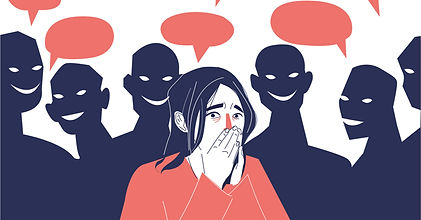
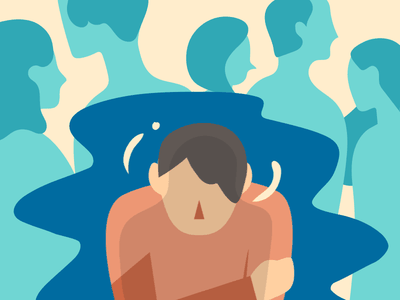
It is normal to feel nervous in some social events. For instance, going to a new school or giving a public presentation. But for people who live with social phobias, daily interactions cause significant anxiety, fear, self-consciousness and embarrassment because you fear being scrutinised or judged by others.
Social phobia, also known as social anxiety disorder (SAD), is a mental illness in which you will feel a persistent and intense fear of being watched and judged by others. And this fear goes far beyond control. This is another form of anxiety or fear of being judged, negatively evaluated, or rejected in a social or performance situation.
It is NOT your fault to be scared of presenting yourself. It is NOT an illness that can be overcame by 'trying to be brave'.
Common Triggers
A vanity of different situations, both internally and externally, can trigger social phobia. You may have one or multiple triggers, which is why we should get into the habit of journaling, recording and identifying your personal triggers.
☞ Biological factors: genetics, brain chemistry, and stressful life experiences or trauma
☞ Environmental factors: people, places, or things
The most common triggers teens may face are as follows:
-
Performances (athletic competitions, musical performances, or public speaking)
-
Social events such as parties or meeting new people
-
Making small talks
-
Dating
-
Stating your opinions
-
Writing and Reading publicly
-
Eating in front of others
-
Using public restrooms: Paruresis
Signs & Symptoms
Emotional & Behavioural
-
Fear of situations in which you may be judged
-
Worrying about embarrassing or humiliating yourself
-
Intense fear of interacting or talking with strangers
-
Fear that others will notice that you look anxious
-
Fear of physical symptoms that may cause you embarrassment, such as blushing, sweating, trembling or having a shaky voice
-
Avoiding common social interactions
-
Avoiding doing things or speaking to people out of fear of embarrassment
-
Avoiding situations where you might be the centre of attention
-
Having anxiety in anticipation of a feared activity or event
-
Enduring a social situation with intense fear or anxiety
-
Spending time after a social situation analysing your performance and identifying flaws in your interactions
-
Expecting the worst possible consequences from a negative experience during a social situation
Physical
-
Blushing
-
Fast heartbeat
-
Trembling
-
Sweating
-
Upset stomach or nausea
-
Trouble catching your breath
-
Dizziness or lightheadedness
-
Feeling that your mind has gone blank
-
Muscle tension
Social Anxiety = Shyness?
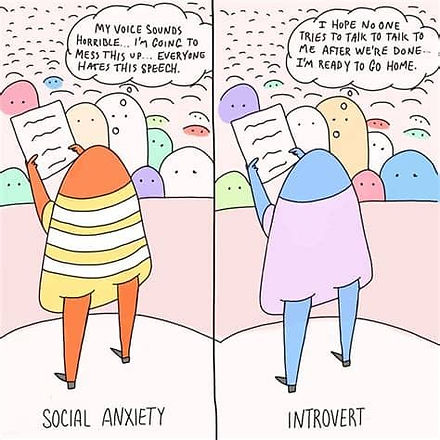
Social anxiety is more than shyness. It's a fear that does not go away and affects everyday activities, self confidence, relationships and work or school life. Many people occasionally worry about social situations, but someone with social anxiety feels overly worried before, during and after them.

Embracing your shyness as personality trait or seek for medical intervention?
Sometimes, we just don't feel confident in social skills when around unfamiliar people. And that's extremely common. Shyness is a personality trait that may cause distress in certain situations but can still live a fairly stable life.
Social phobia/anxiety, however, is a mental illness that requires medical intervention as significant distress and functional impairment affect one’s daily life. Sufferers may have an overwhelming fear that being around people will result in humiliation. This hinders them from stepping out of the comfort zone.
We should be more considerate towards these in need, giving them enough support and time to help them express themselves.
Misconceptions of Introversion
Quiet kids are, most of the time, described as being introvert. But do we really know what that mean? Like shyness, introversion is a personality trait that does not cause distress unless there’s pressure to act extroverted. For introverts, being around people, especially groups, drains energy. They, therefore, need alone time to recharge and prefer to stick with trusted friends. Yet, they can be confident presenting themselves in front of a big crowd.
Am I shy, introverted or do I have social anxiety? When is it too much for a personality?
If you have an intense fear of social situations, will you do anything you can to avoid them, keeping you from caring out your day to day life? Do you try to avoid spotlights, opportunities, or even everyday tasks like going to the grocery store? If the answer is yes, then quite obviously, you most likely have a social anxiety disorder.
If you think you might have a social anxiety, it is EXTREMELY important that you get some form of help! Even if you’re not 100% sure, it’s best to visit a doctor or psychiatrist. They can take a look at how you’re feeling and properly diagnose you.
Don't hesitate to contact us to share your thoughts and feelings. We will get in touch with you ASAP!
Social Anxiety Disorder
-
A mental illness
-
Have an overwhelming fear that being around others will result in humiliation
-
May have the desire to be around people, but anxiety gets in the way
-
As a mental disorder, it causes significant distress and functional impairment
Shyness
-
A personality trait
-
Don't feel confident in social skills when around people they don't know well
-
May feel comfortable being around familiar people
-
Can cause distress in certain situations
Introversion
-
A personality trait
-
Being around people, especially groups, drains energy
-
Need alone time to recharge and prefer to be social with only a few close people
-
Not distressing unless there is pressure to act extroverted
Medication
-
SSRIs and venlafaxine
The neurotransmitter serotonin is integrated in brain circuits involved in regulating mood, sleep, appetit and pain sensation. SSRIs increases the availability of serotoninbut also norepinephire(adrenaline), which regulates fear condition and stress response.
Studies have found that 50% to 80% of patients with the general form of social anxiety disorder respond after taking venlafaxine or an SSRI for eight to 12 weeks. Most of these drugs are about equally effective at treating social anxiety disorder. The exception is fluoxetine (Prozac). Only one in three controlled studies found that it provided more benefit than placebo.
When used to treat patients with social anxiety disorder, venlafaxine or an SSRI is usually prescribed at half the dose used to treat depression, and then increased only gradually. Most patients respond within weeks. But more than 25% of those who are not responding by the eighth week will improve after another month of drug treatment — which is why many clinicians recommend that patients try a drug for 12 weeks before switching to another one.
-
Beta Blockers
Help reduce symptoms such as swearing, rapid heartbeat or shortness of breath, studies shows that taking it one hour before performances helps with social phobia.
-
Benzodiazepines
Boosts the activity of gamma-aminobutyric acid, which is a neurotransmitter. Can be used as an on needed basis for social phobias, good for patients that cannot tolerate or respond to SSRIs or venlafaxine, but it is highly addictive as patient taking them for more than two weeks can become dependant on them.
Treatment for Social Phobia/Anxiety
The treatment can be categorised into two main parts:
Psychotherapy
-
CBT (Cognitive behavioural therapy)
The goal of the therapy is to get techniques and practice so the patient can change how they think of a situation that terrify them. They will gradually expose thew patient to situation they feel are terrifying, for example if a party is coming up they can set up a goal to talk to 1 or 2 people at the party,
It is used for about 12 top 16 weeks consistently with sessions lasting 60-90 min, in studies patients need 6-12 week before showing improvement. Studies found that one-half to two-thirds of patients who underwent CBT experienced clinically meaningful improvements in symptoms after 12 weeks of therapy.

Social Media Phobia: An Uprising Disorder
When is the last time you live completely technology or, more specifically, electronic device-free? Can't find the answer? That's okay; most of us won't have an answer. What about those social media apps ranked as the most frequently use on your devices?
One way or another, anxiety seems inextricably connected to the use of social media. In fact, recent research has shown strong associations between increased use of social media platforms and depressive anxiety.
Downsides of online success: Social Media Anxiety is a thing. An increase in self-awareness?
No matter what you did today on your phone or computer, it’s likely that social media was involved. Did you catch up with friends on Facebook, post photos of your dog on Twitter? Perhaps our Instagram post brings you here.
With increased use of social media platforms (77% of the population in the US), mental challenges and stressors faced by teens are exacerbated, leading to social media disorder or internet addiction disorder (IA).
Many experts have described a rise in sleeplessness, loneliness, worry and dependence among teenagers. One study found that 48% of teens who spend 5 hours per day on an electronic device have at least one suicide risk factor. Yet, teens nowadays average 7+ hours of screen time daily, not including school work.
Social media-induced stressors include:
-
Seeing people posting about events to which you haven’t been invited
☞ feeling replaceable -
Feeling pressure to post positive and attractive content about yourself
-
Feeling pressure to get comments and likes on your posts
-
Having someone post things about you that you cannot change or control
We ask you to check: if you’re not up-to-date on the latest social media posts, will it prevent you from feeling like you can participate in real-life conversations at school the next day? If the answer is yes, perhaps you should consider cutting down your social media use!

Do you feel the immense stress to catch up with social media trend for a sense of belonging? Are you eager to be in one?
Is limiting the only way?
Tips to Deal with Social Media Anxiety
-
Keep selfies to minimum
-
Act, instead of posting
-
Post only when necessary
-
Always check facts. There're plenty "fake news" flowing around in those places
-
Don't get carry away by the posts; people tend to show the best selves on social media platforms
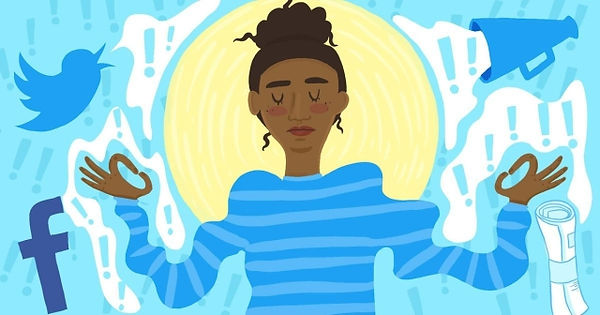
"Free" yourself from the "technology" age. Don't get stuck with the stiff mindset!
Tips to Deal with Social Phobia
When you're on your way to school
-
Don't be late!
-
Don't rush in if you are late. Take a few deep breaths and allow yourself to relax a bit before facing the classmates.
-
Choose your outfit in advance. Aim for the ones that will make you feel comfortable and good in. Being well-dressed can boost your confidence. If your school has uniform, even better!
When you're actually at school
-
Know your %*&(@% by previewing the course in advance
-
Ask any questions to a close friend before raising your hand if you don't feel like it
When you're meeting someone important (e.g., teachers, consultants, etc)
-
Arrive first. Be there at least 10 mins early to have enough time to freshen up, have a cup of coffee, and calm down a little.
-
Text a friend and ask for encouragement to boost confidence! Example, “Tell me something wonderful about myself, please!”
When you're in a party or any other social events
-
Distract yourself on the way. The journey is always the worst part. Your mind might wander around – but that's okay. Use distraction techniques to prevent your mind from going over everything that could go wrong.
-
Don't go in solo; get a friend to meet you at the door or on the street
-
Practice your smack talks in advance. General questions like movies, food or travelling are great ice-breakers!
-
And always remember: you can always leave if you need to! You’re not trapped. Try and stay for at least one hour to build on your confidence, but you don’t have to be the last one standing.